Imaginaries of science, techno-imaginaries, complex thought. PhD USP / Grenoble Alpes. Associate researcher at Centre Figura (UQAM, 2022-2023).
Lecturer
Over 10 years of teaching experience. Faculty at USP (Celacc). 33 thesis supervisions. 45 monograph examination boards.
Instructional designer
Innovative pedagogical approaches for diverse audiences. Theoretical grounding in education and techno-pedagogy.
Science communicator
Science outreach workshops for children and youth. Mentor at Expo-sciences (Les Scientifines, Montreal).
Director
Geist Corp
Research group on the imaginaries of technology. Geist brings together scholars and practitioners around the ways contemporary societies think about, narrate, and stage technology — across science, fiction, popular culture, and artistic practice.
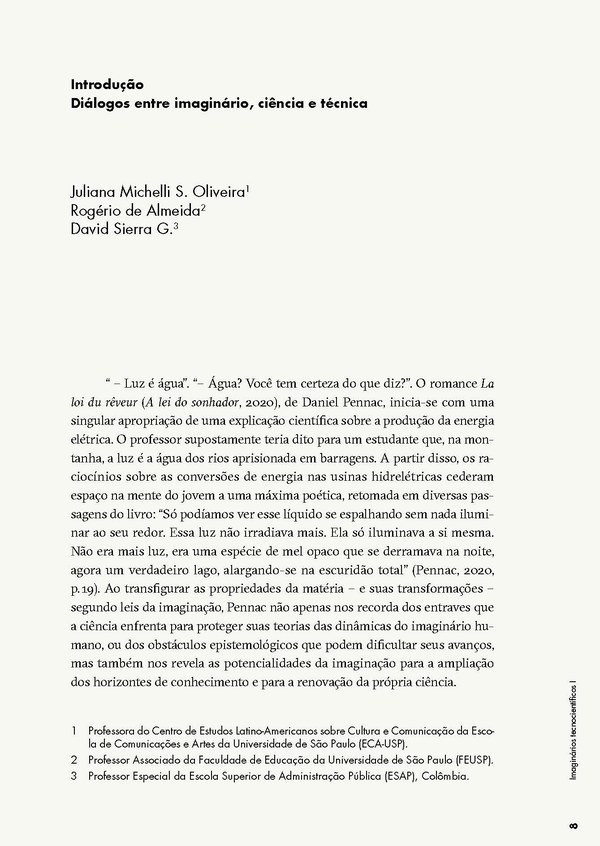
La fiction, boussole de la science ? L'imaginaire du Novacène chez James Lovelock
Juliana Michelli S. Oliveira
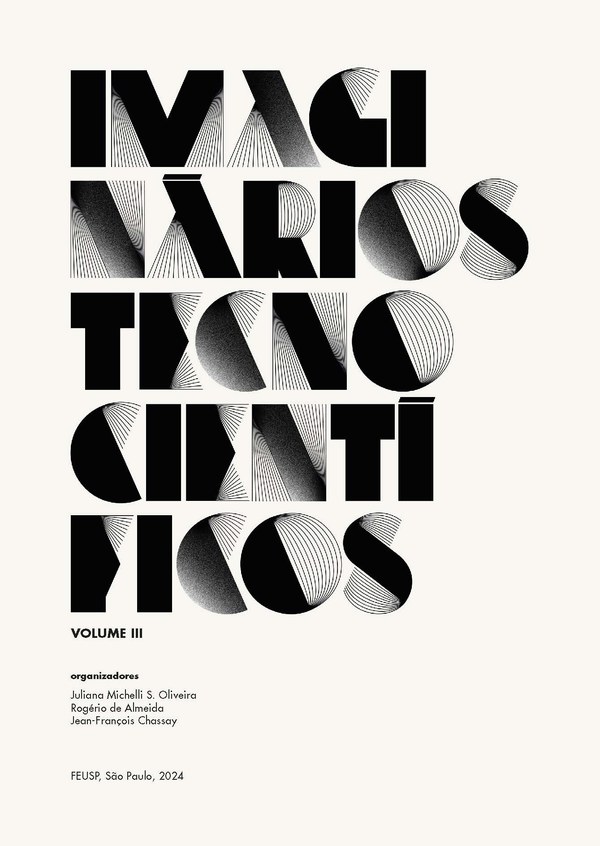
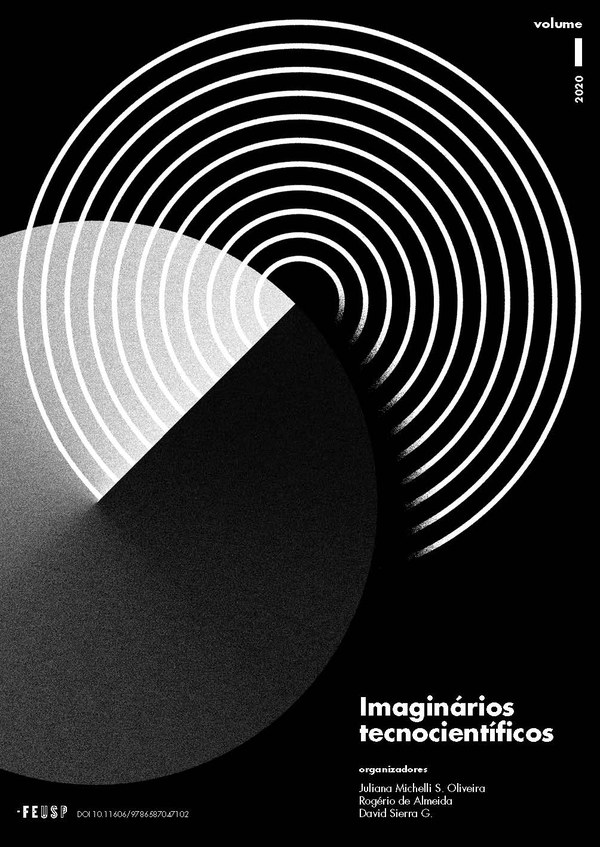
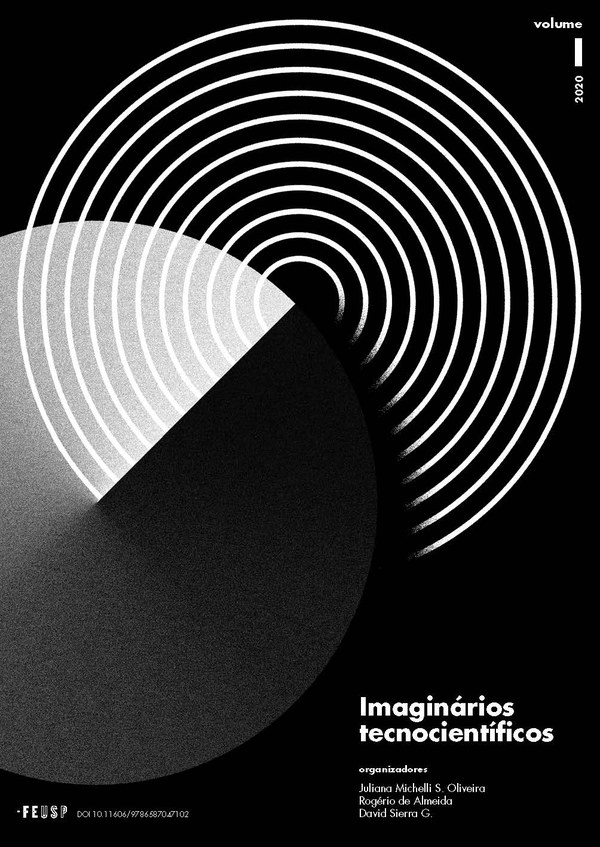
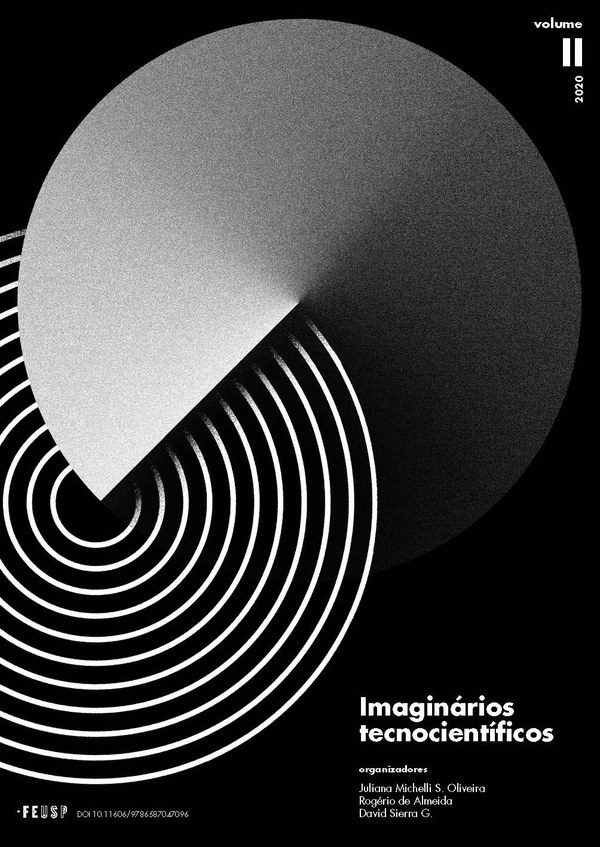
In: Imaginários tecnocientíficos, vol. III, section Horizontes imaginados: trânsitos entre a ciência e a ficção, edited by Juliana Michelli S. Oliveira, Almeida, R. and Chassay, J.-F.. São Paulo: FEUSP, 2024.
Além da imaginação: uma introdução ao imaginário das superinteligências artificiais no Novaceno
Juliana Michelli S. Oliveira
In: O mito do Fim do Mundo: Imaginário & Educação, edited by Alberto Filipe Araújo, Rogério de Almeida and Marcos Beccari. São Paulo: FEUSP, 2023. (Coleção Mitos da Pós-Modernidade, vol. 4).
Com o que sonham os androides? Ensaio sobre tecno-imaginários contemporâneos
Juliana Michelli S. Oliveira
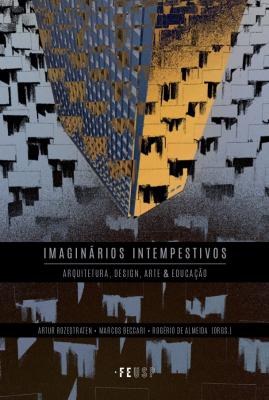
In: Imaginários intempestivos: arquitetura, design, arte & educação, edited by Artur Rozestraten, Marcos Beccari and Rogério de Almeida. São Paulo: FEUSP, 2019.
Collaborative platform for creating digital characters with generative AI, rooted in Brazilian public education.
Funding
Fundação Itaú — IA para Educação call
Technical partner
InBot
Period
December 2024 — February 2026
Audience
Teachers and students of Brazilian public schools
Aim
To design a collaborative platform allowing teachers and their students to create, customize, and converse with educational and cultural characters inspired by Brazilian figures — using generative AI to make schools not passive consumers of technologies, but active participants in their understanding, content development, and experimentation.
Origin of the name
The term Ai_Monguetá is borrowed from the Língua Geral, a hybrid language forged in colonial times from Old Tupi that long served as a means of communication between Indigenous peoples, colonizers, and enslaved Africans. In its broadest sense, ai-monguetá can be translated as "to speak"1. The word monguetá also evokes, in contemporary Guarani, the idea of "to converse," and takes on a deeper meaning in the Mbyá-Guarani vocabulary: "to inspire" or "to make the word circulate"2, valuing orality as a vehicle for transmission and social bonding.
With a contemporary reading and a touch of poetic license, the word also evokes the world of artificial intelligences — the IAs, or AIs in English. The name therefore carries a double gaze: one turned toward Brazilian linguistic and cultural roots, the other toward the transformations that emerge at the encounter between human and digital forms of communication.
1 A. Gonçalves Dias, Dicionário da Língua Tupy, chamada Língua Geral dos Indígenas do Brasil, Lipsia, F.A. Brockhaus, 1858, p. 457. 2Revista do Museu Paulista, no. S, vol. IV, São Paulo, 1950, p. 245.
Pedagogical approach
The project rested on four guiding principles: valuing Brazilian culture; introducing teachers and students critically to language models and conversational agents; personalizing characters according to school curricula and class interests; and digital literacy understood as a reflective, ethical, and creative relationship with AI. Five training modules were produced (AI, conversational agents, character selection, research and contours, agent personality), each delivered as video, text, and lesson plan. A knowledge sheet in eight axes (identity, historical and social context, intellectual and artistic production, influences, imaginary and representations, controversies, relationship to technology, profile tuning) structured students' research and the building of characters.
Content design and production
Juliana authored all the educational content of the project — writing the texts, building the lesson plans, and designing the training videos, from storytelling through animation to production. These materials were conceived as ready-to-use tools, accessible to teachers new to artificial intelligence.
Technical architecture
The platform integrates a web interface with public and private areas, differentiated profiles (administration, pedagogical coordination, teacher, student, visitor), a hybrid conversational engine combining InBot's non-generative technology with generative models, a collaborative character database, a configuration module, analytics tools, and a RAG system to feed agents with specific content.
Characters created
Eight conversational agents were developed: six by participating teachers — Paulina, Candido Portinari, Chico Mendes, Enedina Alves Marques, Maria Firmina dos Reis, and Paulo Freire — and two model characters produced by the Ai_Monguetá team for demonstration and training purposes: Machado de Assis and Miro. The set highlights trajectories often little-known in school and digital environments.
The Paulina case
An emblematic character of the project, Paulina was created in partnership with teacher Romulo Paulino and his students at Escola Amorim Lima. Conceived as a public-school teacher inspired by Freirean principles and articulated with the school's anti-racist and community practices, she was unveiled to the public during the Festa Kizomba in November 2025 — the school community being able to interact with her by text and voice.
Montreal applications
The project had two Montreal-based applications, allowing the approach to be transposed into a Quebec context:
Germaine Guèvremont character — creation of a conversational agent inspired by the Quebec writer, extending the Brazilian work on literary and cultural figures.
Virtual homework assistant — development of a character designed as a study companion for young people, conceived not to deliver answers but to spark reflection: asking questions, prompting hypotheses, encouraging students to put their reasoning into words.
Impact and outlook
Beyond producing a platform and agents, the project constituted a true testing ground for pedagogical experimentation, weaving together technological development, teacher training, and cultural valorization. It showed that integrating AI, culture, and education depends not only on a good tool, but also on pedagogical time, attentive listening, teacher mediation, and institutional openness to experimentation. The challenges identified — infrastructure, evaluative pressures, heterogeneity of digital literacies, scarcity of organized sources on certain figures — feed perspectives for continuity: deepening teacher training, closer support during character design, expanding the character repertoire, and strengthening public spaces where school experiences can circulate.
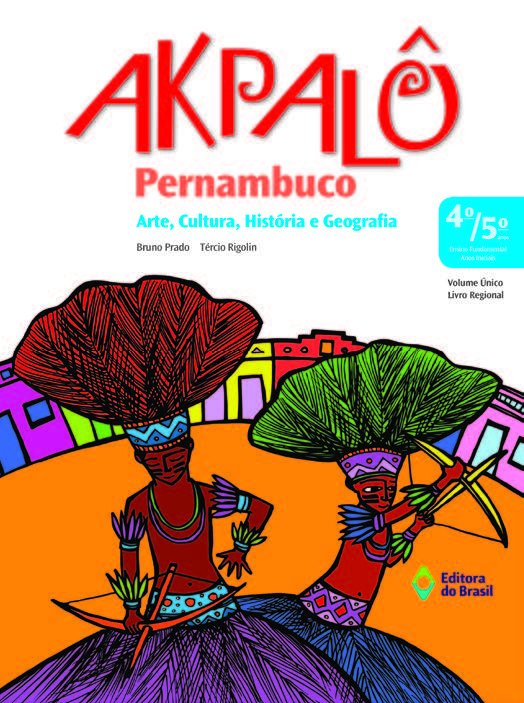
Akpalô Pernambuco — Arte, Cultura, História e Geografia
Textbook for 4th and 5th grade primary school, approved by PNLD 2016 — National Book and Teaching Material Program of the Brazilian government.
Program
PNLD 2016
Edition
2014 — 2015
Authors
Bruno Prado and Tércio Rigolin
Publisher
Editora do Brasil
My role
In charge of the book's edition and coordination of the editorial work. The editorial service was carried out by Oba Editorial, where Juliana was working at the time, for Editora do Brasil.
Distribution
Approved by PNLD, the book was distributed in Brazilian public schools in 2016 — Regional textbook of Pernambuco, designed for 4th and 5th grade students of primary school (Ensino Fundamental Anos Iniciais).
Official evaluation (PNLD 2016 Guide)
The Brazilian Ministry of Education described the book as an integrated approach to the components of History, Geography, Art and Culture of the state of Pernambuco, grounded in a socio-constructivist and socio-critical perspective, with a graphic and editorial design suited to the learning needs of primary school students.
To spark interest in scientific careers among children and young people — particularly girls — within a perspective of gender equality in science.
In-person workshops
Leading science outreach workshops in several Montreal schools:
Les enfants du mondeSt. MonicaParkdaleSaint Noël ChabanelÉcole Petite BourgogneLambert ClosseNotre-Dame-de-Lourdes
Also in libraries and community centres across the Montreal area.
Online workshops
Leading online workshops within the En avant math! project.
Les Scientifines, Montreal · 2024 – present
Mentoring at the Expo-sciences Hydro-Québec
Mentoring student projects in the junior and adolescent categories of the Expo-sciences Hydro-Québec, with Les Scientifines.
Awards
Two projects awarded the Prix Prestige, one of which a finalist among more than 150 projects at the Super Expo-sciences du Québec.
About
Background, research interests, and education.
Profile
PhD in Education (USP / Université Grenoble Alpes), Juliana Michelli S. Oliveira develops interdisciplinary research at the intersection of sciences, humanities, and imaginary studies. Her work focuses on cultural representations of science and technology, techno-imaginaries, and complex thought. From 2022 to 2023, she was an associate researcher at Centre Figura (UQAM). Today, she is a faculty member at the Celacc — Centre for Latin American Studies on Culture and Communication (USP) and a science communicator at Les Scientifines, in Montreal.
Research interests
Imaginaries of scienceTechno-imaginariesComplex thoughtScience fictionArtificial intelligencesScientific cultureAnthropology of the imaginary
Education
2019
PhD in Education
University of São Paulo (research stay: Université Grenoble Alpes, France)
MIFI equivalence: Doctorate, Didactics
2016
Teaching Diploma in Letters
University of São Paulo
MIFI equivalence: Bachelor's / Secondary school teacher training
2014
Bachelor's in Letters — Modern Languages (French)
University of São Paulo (exchange: Université Sorbonne, Paris IV)
MIFI equivalence: Bachelor's / Modern languages and literatures